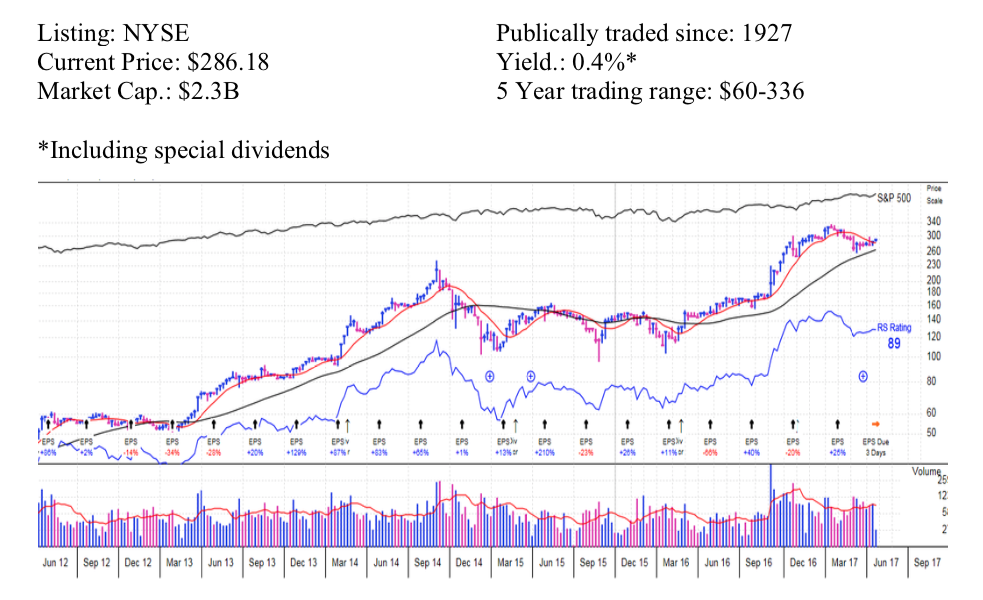
Author: Claudia Diaz

Portfolio Manager’s Monthly Update – March 2018

March 14, 2018

Dear Investors,

The Fund value retreated (-.58%) last month after a fine performance in January. The Alerian MLP Index we have long used for performance comparison declined (-9.69%) in February. The Fund is now up +18% net of fees for the year vs.
(-6.5%) for the index. Our long exposure for most of the month was ~110% and our short position, oil price hedges, running about 10%.

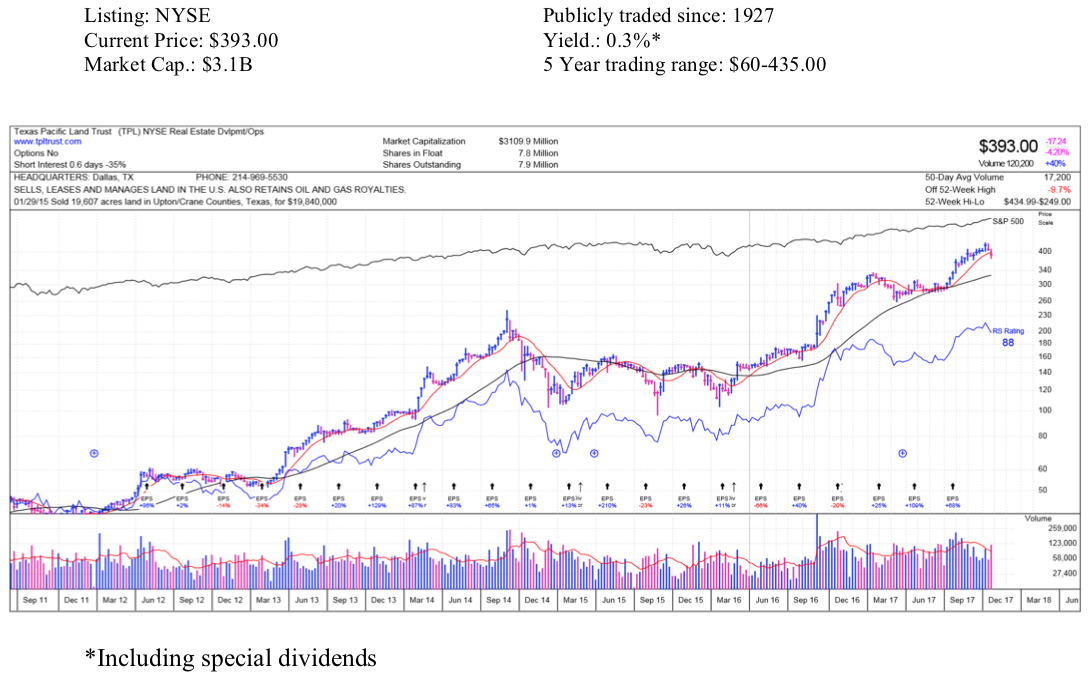
Our key position in Texas Pacific Land Trust was stable but did experience some volatility. Their earnings report for the year was outstanding even though they reported a backlog of drilled but uncompleted wells “DUCs” on their lands. Those DUCs are a source of concern for a number of analysts and for some investors with the thinking being that a large number of future completions will flood the oil market and depress prices. Some of those concerns may be justified because many of the DUCs in the Permian will be completed in the next two years and we do expect them to put some pressure on prices in the short term. Many of the DUCs outside the Permian, however, may not be completed anytime soon, as those in the Marcellus face a shortage of infrastructure and a glut of natural gas from existing wells. Many of the DUCs in other fields in the U.S. will need to see sustained prices above $65-70 before spending money for completions. Not so in the Permian where costs are very low especially compared to production volumes.

Any production bump from DUC completions likely will be short lived because though drilling will proceed in the Permian, worldwide spending to replace natural depletion of existing production is woefully inadequate to meet still rising demand for fossil fuels. We do expect some pressure on prices later this year, but by 2020 there is no other way to meet rising energy demand than to drill for oil and gas. If demand continues growing even the much higher production that we expect form the Permian (much higher than industry estimates) will not be enough to keep oil and gas prices from moving to much higher levels.

The continued rise in the demand for fossil fuels is simply a fact, yet most public reports (outside the energy industry) speak of nothing but alternative energy or the future of electric cars. While the use of alternative energy is rising, and may well even be the future for the world, it is hard to see that occurring when we are not really dealing with the here and now. Almost all publically listed alternative energy companies have gone broke and all of the ones that have survived are subsidized by government. Whether those subsidies come from the U.S. or from China makes no difference when we speak in terms of global energy needs or emissions that dirty our air, it is still a subsidy. Future energy must be cheap enough so that people can afford it and subsidies are not the answer.

It is time that all governments and people start discussing our future energy needs in those terms. The U.S. Congress is beginning to reduce subsidies to the wind and solar industries and both of those groups are in retreat. What makes sense now for a national energy policy is to encourage the use of natural gas and to push for the faster conversion of coal plants to natural gas. Both fuels are abundant but gas emissions are half that of coal. There is no reason to punish coal, just allow economics and strict emissions standards to do the work. We can no longer afford to allow emotional arguments with no factual basis to impede progress.

The U.S. is becoming an energy powerhouse. We should take full advantage of our well- earned energy leadership and profit while helping the rest of the world reduce energy costs. In the meantime, for the Fund, we will continue to do what we have been doing for years, provide positive returns for our investors. In doing so we try to follow the advice of Will Rogers as he said, “Only buy stocks that go up, if they don’t go up don’t buy them.”

Our best wishes,

Dana McGinnis
and the Mission Advisors team

Portfolio Manager’s Monthly Update – February 2018

February 14, 2018

Dear Investors,

We suggested last month that we believed that 2018 would be a strong year for equity markets including those in the energy sector and in our energy portfolio. In January, we were certainly not disappointed as equity markets raced ahead and the portfolio gained 18.7% net of fees. Most of these gains reflected optimism about the general strength of the economy and a massive tax cut delivered from Congress in December. The main beneficiaries of the cuts will be corporations who will see their tax rates decline from 39% to 21% and go a long way to putting US corporations on an equal tax footing with competition around the world (from a tax perspective). We believe the lower tax rates given to most mid-income Americans will add strength to the economy for years to come.

There are potential risks to the rosy economic expectations that we saw in January, those being fears of higher inflation and higher rates as a consequence of larger deficits. Those fears took over in February and knocked the market back down to realistic levels. Fortunately, our portfolio is still up nicely for the year. The gains may have come too quickly, but so did the reversal. We believe the case for higher markets is on firm economic footing and if this proves correct, the market should be reasserting itself soon.

The energy markets, including positions in our portfolio began correcting this month as well, but for the obvious reason that oil prices finally started to fall. The macro background for oil is centered on the production volumes from OPEC and from the Permian Basin of West Texas and New Mexico. In the world of oil, these are crucial areas.=

Oil prices have risen for several months because of OPEC cutbacks, inventory drawdowns, and worldwide increases in demand. The world began to notice recently that oil production from the Permian Basin has risen much more quickly that markets thought possible. We think that this positive surprise will continue from the Permian and that production from the region will be far stronger than estimated now.

As oil production from the US passes ten million barrels a day, the industry is now thinking that US production can be as much as 11 million barrels/day by 2019. We think it could be that high or higher by 2019 and then much higher by 2021-23, all as a result of Permian production. If that does happen, oil prices will come under pressure.

However, even as Permian volumes put pressure on oil prices, Permian volumes will just continue to rise and the Permian producers will capture more and more market share at the expense of producers in the rest of the world.

For exposure to the Permian, we continue to like Texas Pacific Land Trust, Viper Energy Partners, and other select energy companies focused on the Permian.

Our best wishes,

Dana McGinnis and the team at
Mission Advisors 

Portfolio Manager’s Monthly Update – January 2018

January 19, 2018

Dear Investors,

We want to reemphasize what we said in last month’s letter: we think 2018 will be a good year for energy stocks. Selection will continue to be important and we believe the portfolio is well positioned. It is our intention to update our latest report on Texas Pacific Land Trust, our largest holding. We will discuss the state of the energy business in a longer communication soon. In the meantime we include our last TPL letter and wish everyone a prosperous New Year.

Yours truly,

Dana McGinnis
and the team at Mission Advisors 

An Introduction to Texas Pacific Land Trust (TPL) – Part III

The Water Business

This is the final report of our 3-part series entitled, “An Introduction to Texas Pacific Land Trust” (dated April 16 and June 9, 2017, respectively.) For copies of these reports please contact us at info@missionadv.com.

We believe that no publicly traded energy stock is in a better position than Texas Pacific Land Trust to make money for its shareholders by appreciation. In addition to a potential rise in stock price, we believe that the future ability of TPL to pay cash dividends will be prodigious.

There is a new revenue stream coming for Texas Pacific Land Trust that, for a short time, may even eclipse oil and gas revenue. That revenue stream will come from the sale, and possibly the recycling and disposal, of water. For energy investors, this is a fortunate circumstance. For the first time in its history, TPL is managing an active business to make money for shareholders. In May, TPL hired Robert Crain, former head of water development at EOG Resources. He and his team will develop the water business for TPL. We are encouraged by this, and feel that shareholders will soon see the results.

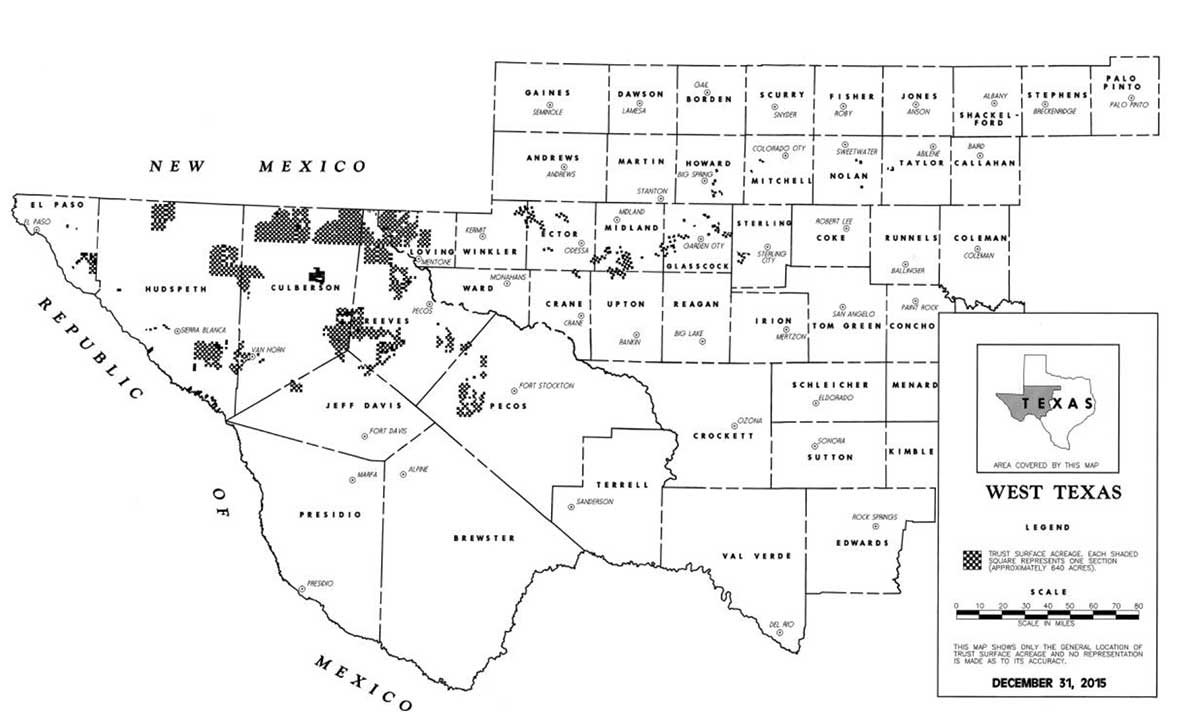
By virtue of their origin as a railroad land-grant company in the 1800s, shareholders are now owners of vast tracts of land in West Texas. TPL owns approximately 900,000 acres of land in West Texas, 769,000 acres of which are in the Delaware Basin section of the Permian Basin, arguably the most desirable oil play in the world. The surface ownership is valuable in its own right. Operators must pay TPL a fee for access to their land in the form of roads, pads and right-of-way. We believe that ownership of mineral rights will produce the most revenue in the future. Mineral revenues come from royalty interest, and TPL holds some 300,000 acres of 1/16th royalty interest in the counties of Culberson, Reeves, and Loving, three of the six counties in the heart of the Delaware play—the Sweet Spot.

TPL is a passive holder of mineral rights, which means it does not control when operators drill on their land. In order to estimate what might occur on TPL land, one has to aggregate the information of drilling schedules from operators in the areas around TPL royalty interests. Fortunately, TPL owns large expanses of mineral rights in what is the most active drilling areas in the world today. Companies drilling in these active areas include Anadarko Petroleum, Apache Corporation, Chevron, Cimerex, Exxon, Occidental Petroleum, WPX and many others.

We have utilized this information to estimate possible future production to TPL’s account. Bear in mind that, historically, pronouncements about individual company drilling schedules have not been entirely reliable. Often companies do not come close to drilling as many wells as promised. In the Delaware Basin, however, we do gather confidence from the reputable operators named above, and from the remarkable amount of investment in Delaware acreage during the last 2-3 years alone. Companies simply must drill to keep acquired rights and get their money back.

There are now 218 rigs operating in the Delaware Basin and a total of 382 rigs operating in the Permian. These are mostly horizontal, mobile rigs. Each rig can drill, but not complete, 15 – 20 wells per year. It appears that the majority of wells drilled in the Delaware are still not being completed. This will change. By all reliable accounts, a transition to pad drilling is forthcoming and thus the pace of drilling and production should accelerate soon. As pad drilling begins, so will the pace of completions. Future completions will have to include the very large inventory of wells drilled but uncompleted — the so called DUCs.

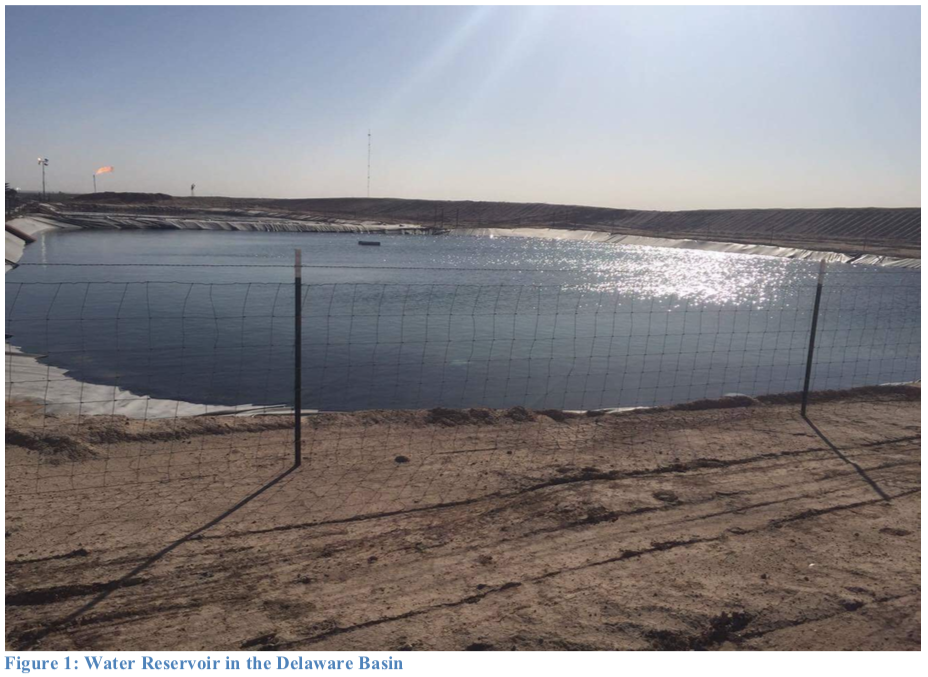
The availability of water does not have much to do with the pace of drilling but it has everything to do with the pace of well completions and therefore oil and gas production. Approximately 500,000 barrels of brackish water are needed to complete each new well. Once those wells are completed and production begins, those same wells are producing as many of four barrels of water for every barrel of oil. So, the availability, use, possible recycling, and disposal of water is every bit as important as the oil business in the Delaware.

Our previous estimate of 100 uncompleted wells was very close to the 90 DUCs reported by TPL on their land in the latest 10Q. In essence, TPL is actively putting themselves in position to supply as much water as they can when these wells are completed. We think they are in the best competitive position to deliver water to wells drilled on or near the majority of their acreage in Reeves, Loving and Culberson counties – the “Sweet Spot.”

Oil companies operating in the Delaware Basin are the best-known names in the industry. They have invested heavily in buying acreage over the last few years. All of these companies refer to the Delaware as a key area for capital expenditure and most are in the process of drilling multiple wells from the same site, known as “pad drilling”. That process of rapid drilling means more wells, and consequently more completions.

For most of its history, TPL has been a passive company. They keep track of revenues received from mineral royalties, leasing land for grazing and collecting access fees for roads and pipelines crossing their land. TPL has even collected water revenues in the past, by allowing companies to drill water wells on their land. Until recently, those revenues have been lumped together with access fees. Since early 2017, the management rightly recognized that TPL was in an excellent position to significantly increase water revenues for shareholders, by drilling their own wells and marketing water to operators. Dramatic is the word that comes to mind, not only for the potential, but also for the active nature of the operation.

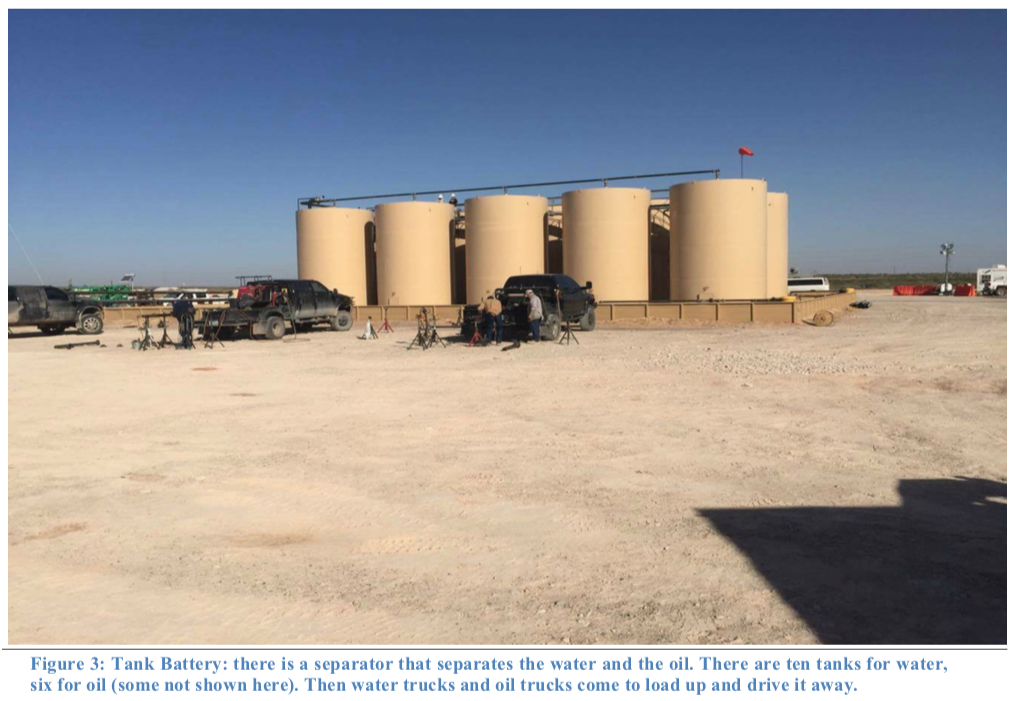
We think TPL’s water business is being built in a systematic and aggressive manner. Because of their large surface ownership and their new willingness to spend money to build a water business, TPL has tremendous competitive advantage. The company has money to spend, and it appears it will develop a series of water fields to supply operator’s needs. For example, they can pump water to holding tanks, where operators pick it up by truck and ferry to drill sites for fracking.

In developing water fields, we believe TPL will ask neighbors to join them in the business. TPL has many long-standing relationships in the basin through its presence on the land since the 1880’s. Any join agreements would add to the revenues for all involved in water pumping or disposal in return for the inclusion of some wells and access rights on adjacent land. Such agreements might also make it harder for others, who also need rights of way, to compete in the same area.

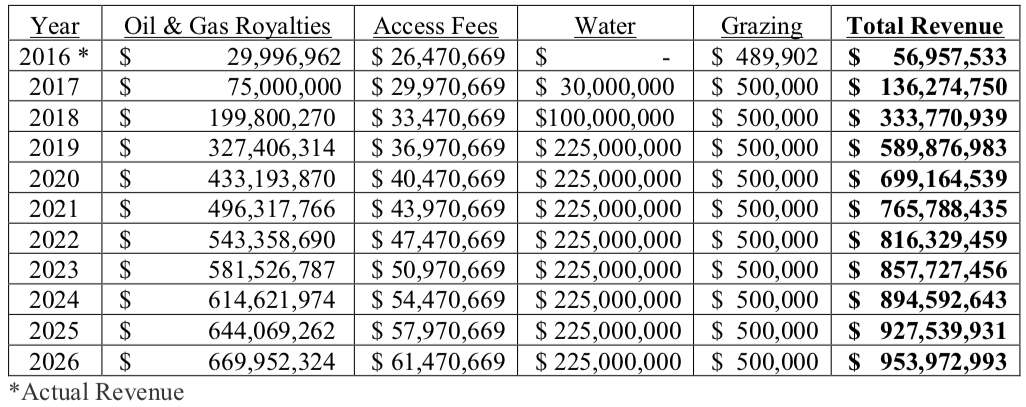
Currently, TPL has six water fields, theoretically able to supply about 150 frac completions a year. We think TPL will construct as many as twenty or more such fields in the future with the capacity of supplying frac water for as many as 600 completions a year. In this scenario, it is conceivable that TPL water revenues will rise from about $28MM a year now to over $200MM a year by 2020.

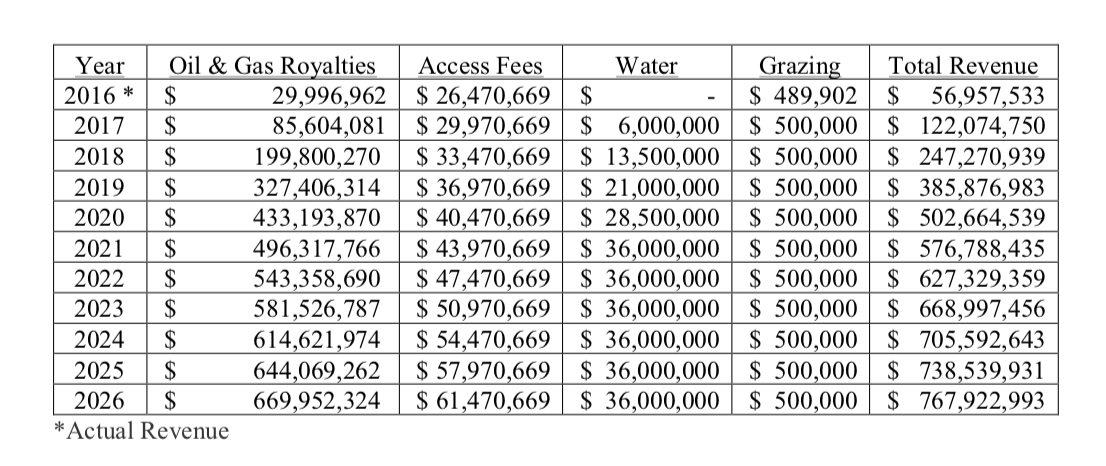
Using our estimate for the pace of future drilling and completions in the Delaware, the following table lays out what we think future revenues at TPL could look like.

TPL pays about 8% state severance tax for oil and gas production. It receives a 15% depletion allowance for that production, and then is subject to normal corporate taxes. All other revenue is available for ongoing expenses, pensions, share retirements, and dividends. We think these estimates are reasonable given TPL’s excellent acreage across the best oil lands in the world today and the current actively reported in the Delaware Basin. If these revenue estimates prove to be correct, Trustees could find themselves contemplating, even after normal share repurchases, paying shareholders $50 in dividends by 2022.

Yours Truly,

Dana McGinnis &
Mission Advisors 

An Introduction to Texas Pacific Land Trust (TPL) – Part II

This report should be read together with our communication of April 16, 2017 entitled, “An Introduction to Texas Pacific Land Trust.” For a copy of this report please contact our offices.

In today’s oil and gas market, we believe no publicly traded entity is in a better position than the Texas Pacific Land Trust. By virtue of their origin as a railroad land-grant company in the 1800s, they are now owners of vast tracts of land in West Texas. It is simply in the right place at the right time. TPL owns approximately 900,000 acres of land in West Texas, 769,000 acres of which are in the Delaware Basin section of the Permian Basin, arguably the most desirable oil play in the world. The surface ownership is valuable in its own right. Operators must pay TPL a fee for access to their land in the form of roads, pads and right-of-way. In our opinion, it is the mineral rights that will produce the most revenue in the future.

Mineral revenues come from royalty interest, and TPL holds some 300,000 acres of 1/16th royalty interest in the counties of Culberson, Reeves, and Loving, three of the six counties in the heart of the Delaware play.

TPL is a passive holder, which means that in order to estimate what is occurring and will occur on TPL land, one has to aggregate information of the drilling schedules from operators in the areas around TPL royalty interests. Those companies include Anadarko Petroleum, Apache Corporation, Chevron, Cimerex, Exxon, Occidental Petroleum, WPX and others.

We have utilized this information to estimate possible future production to TPL’s account. Bear in mind that, historically, pronouncements about individual company drilling schedules have not been entirely reliable. Often companies do not come close to drilling as many wells as promised. In the Delaware Basin, however, we do gather confidence from the reputable operators named above, and from the remarkable amount of investment in Delaware acreage during the last 2-3 years alone. Companies simply must drill to keep acquired rights and get their money back.

We know there are 174 rigs operating in the Delaware Basin today and 310 operating in the Permian. (These are horizontal rigs). Each rig can drill, but not complete, 15 – 20 wells per year. For the moment, it appears that the majority of wells in the Delaware are not being completed as operators are still drilling to hold acreage and delineate zones. By all reliable accounts though, a transition to pad drilling is forthcoming and thus the pace of drilling and production should accelerate in the second half of 2017 and thereafter.

Among the known details about oil and gas activity at TPL, the important facts include: average volume attributable to shareholders (on a BOE/day basis) was about 1000 in 2015 and about 2129 in 2016. There were 60 wells drilled on TPL royalty land in 2015 and 110 wells in 2016 (some wells were drilled on 1/128th royalty acreage and those have been aggregated into the total number of wells by dividing by 9 in order to approximate the total at a constant 1/16th royalty interest).

One would expect that if there were more than 100 wells drilled on TPL land in 2016, production should have gone up more than 500 bbl/day, even at a 1/16th royalty interest. So, why the discrepancy? What occurred is that in 2016 and 2015 a majority of the wells drilled were not completed and producing. To get 500 barrels per day at their 1/16th royalty, at the average IP rate in the Delaware, only about 15 fully producing wells are needed. The rest are DUCs (Drilled UnCompleted wells). More than likely, more than 15 wells were completed but those have been restricted until gas and oil pipelines are completed. That leaves a large inventory of DUCs which will be completed over time for TPL, just as the pace of drilling is set to accelerate.

We estimate the DUC inventory on TPL land is about 120. (We will be able to refine this estimate soon as TPL begins to provide guidance on this number.) Meanwhile, operators in the Delaware have generally said that the drilling pace will accelerate in late 2017 and 2018. To TPL’s advantage, we believe the pace of drilling will increase to 200 wells in late 2017, and to 300 wells a year in 2018 then stay there for years. We have based our estimates on the number of rigs now running in the Delaware and the areas in the Delaware where they are known to be operating. The following charts lay out, based on our assumptions, the number of wells that might produce for the benefit of TPL and the possible total production flowing, at not a penny cost to TPL shareholders.

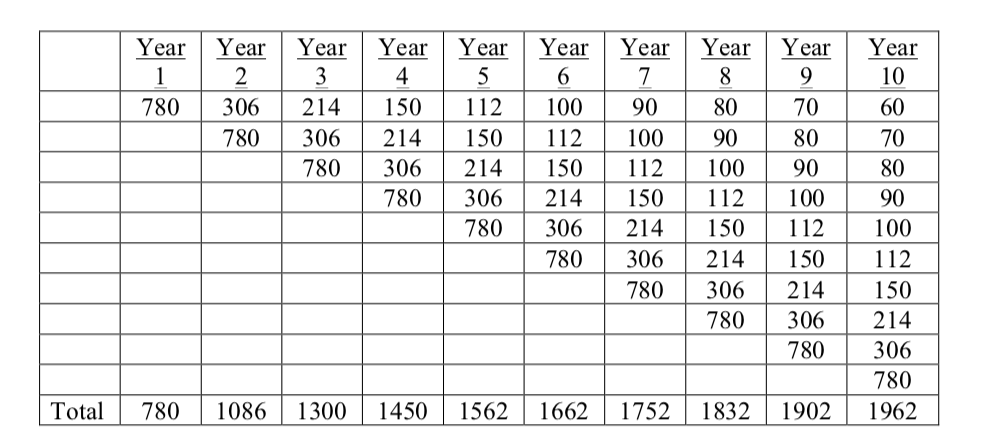
The first table represents the yearly and cumulative production of one well drilled in the Delaware per year, each producing at the current average rate and following an established average decline curve. That depletion rate reduces production 70% in the first year on average and 30% a year for the next four years. Thereafter we estimate the rate of decline to be 10 bbl/day through 10 years. The chart is useful when estimating any number of wells drilled at a constant pace, almost anywhere in the Permian.

Current Average Delaware Production Rates per well Drilled at the rate of one well per year in BOE/day

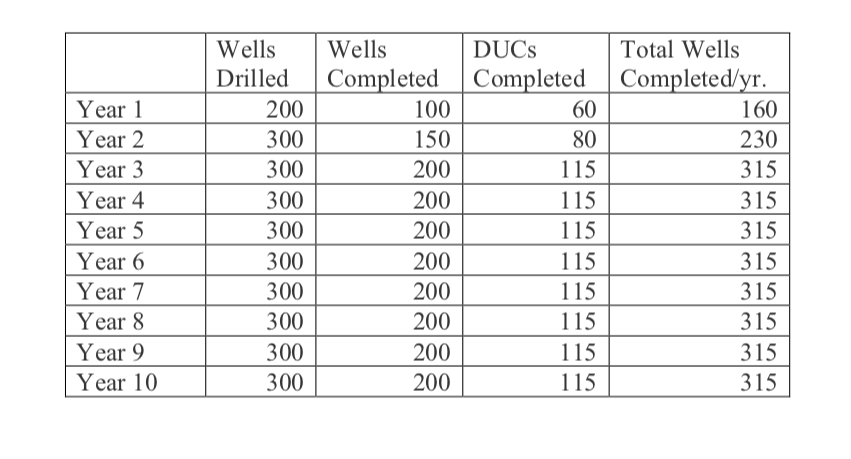
The following table illustrates our estimates of the number of wells that are likely to be drilled on TPL land in future years and incorporates an orderly schedule of completion of those wells. The accelerated schedule listed should begin only in the second half of 2017. So the estimates we show are for a July to July year, rather than the calendar shown in the other tables.

Expected Pace of Drilling on TPL Land Over the Next Few Years


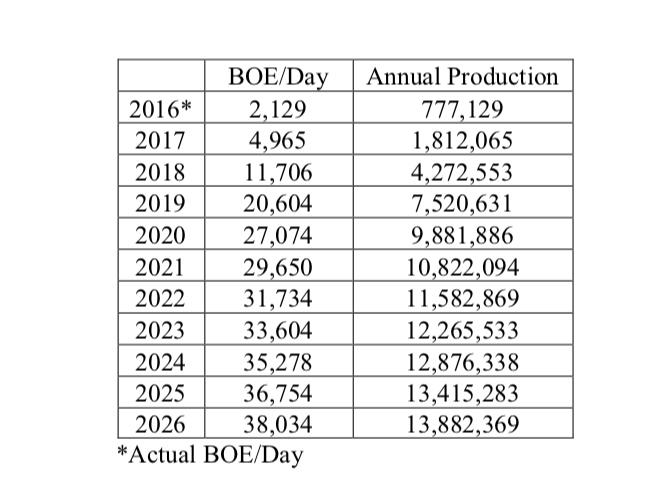
The following table estimates the production we expect for TPL’s account based on a steady drilling program by operators over the next few years. These numbers incorporate our estimates for the lag times of completions as opposed to the drilling schedule.

Estimated Production in Future Years for TPL on a BOE/Day Basis

This last table shows our estimates of all future revenue for TPL including a new category of water sales to operators in need of water for fracking.

Future Estimates of TPL Revenue

Texas Pacific has made two important disclosures recently. The first is that they expect to tell shareholders the number of drilled but uncompleted wells (DUCs) on which they will share revenues. That information could come as soon as late July with the next earnings announcement. Secondly, they have told investors they are looking into developing their water resources as an additional source of revenues. Unlike mineral rights, water rights belong to the surface holder. TPL is one of the largest landholders in the Delaware. Pumping water from shallow but brackish formations could mean significant revenues in the future as operators will need vast quantities of water in order to drill at the pace the industry anticipates.

The combination of these figures indicates that revenues for TPL will be much higher quite soon and will continue to increase as long as drilling and production continue in the Permian. We expect drilling to continue at an accelerated pace for years and for production to continue as long as the world uses oil and gas.

Yours Truly,

Dana McGinnis &
Mission Advisors 

Last minute news: The management of TPL formally announced, late on June 8, 2017 that they have gone into the water business in a much greater manner than anticipated. We expect to increase our estimates for water revenues in the next report. See the link below for the full press release: https://www.businesswire.com/news/home/20170608006364/en/Texas-Pacific-Land-%20Trust-Announces-Formation-Water

An Introduction to Texas Pacific Land Trust (TPL)

We have chosen to review Texas Pacific Land Trust (TPL) because its shares offer a unique way to gain exposure to the Permian Basin, the “sweet spot” of the oil business today. At current prices, the Permian Basin has no competition for producing oil, except for the Middle East where production is controlled by government budgets and not costs. Texas Pacific Land Trust has the good fortune of owning vast amounts of land and mineral rights in arguably the best oil producing area ever, all at no cost to them and their shareholders. 

 Texas Pacific Land Trust was organized under a Declaration of Trust, dated February 1, 1888. It was to receive and hold title to extensive tracts of land in the State of Texas, previously the property of the Texas and Pacific Railway Company, and to issue transferable Certificates of Proprietary Interest prorate to the original holders of certain debt securities of the Texas and Pacific Railway Company. 

The Trust manages land, including royalty interests, for the benefit of its owners. The Trust’s income is derived primarily from oil and gas royalties, easements and sundry income, land sales, grazing and other leases, interest on notes receivable, and interest on investments. 

Some version of this description of the Trust explains their day-to-day affairs. Even a cursory examination of operations, however, will reveal that there is far more to this interesting story and that the more complete version is an intriguing historical story and a compelling investment opportunity. 

As the name suggests, the Trust started as a railroad, one of many built in the 1800’s to link the east and west coasts of America. As with all the companies that were awarded the rights to build the lines, the government, (in the case of TPL it was the State of Texas), gave land to the enterprises in a checkerboard fashion which could be used as collateral to raise money to build the railroads. Many of the companies, such as the Texas and Pacific Railway, went broke. Some more than once. But the railroads were built. 

After the sale of one finished section of the Texas and Pacific line to what is now the Southern Pacific Railroad, the company filed bankruptcy and became a trust. It retained large land holdings in West Texas to be managed and liquidated to repay debt holders. Debt holders exchanged debt for Trust Certificates and holders became shareholders. All debts were converted so the Trust has no debt obligations. Looking at the company and the Trust from today’s perspective, one could add two key points to the official Trust description. The first is that the vast majority of the remaining land is in what happens to be oil producing land in the Permian Basin. Secondly, most of the Trust’s revenue after taxes and expenses is used to repurchase shares on the open market. This concept has been deemed by the Trustees over the years to be the most efficient way to return money to shareholders in keeping with the original intentions of the Trust Declaration of 1888. It has served shareholders well as this program has retired an average of 2.5% of outstanding shares per year for many years and the price of the remaining shares have appreciated greatly over time. 


A Quick History of the Trust as a Public Entity 

The Trust struggled in the early years to make much money by leasing grazing rights, collecting access fees, and selling some of the more than 3.5 million acres of land it owned. Things, changed when oil was discovered in the Permian Basin in the 1920’s and oil royalties were added to the revenue stream. In the ensuing years, the Trust shares greatly appreciated, split many times and paid many special dividends. The number of shares was constantly shrinking via the repurchase philosophy still in place today. In the 1950’s, oil royalties had grown to such an extent that a decision was made to spin off the oil and gas business to shareholders into a company named TXL Oil. This company was eventually purchased by Texaco, which itself was later acquired by Chevron. The spin off rights to TXL Oil originally covered some 2.5 million royalty acres, much of it in the most productive areas in the Permian Basin. Those royalty acres are still held by Chevron 

Corporation today and are probably the second largest holding of any company in the Permian. Had those mineral rights been retained by the Trust, it would be one of the largest oil companies in the world today. 

Fortunately, Texas Pacific Land Trust retained some of their original mineral rights through the conveyance agreement of the spun-off oil company. So today, in addition to the surface ownership of about 900,000 acres of land, TPL still owns royalty interests on about half that land, consisting mostly of a 1/16 mineral interest. Some of those rights are on land not owned by the Trust. Moreover, for anyone who owns shares today or is contemplating investing, the majority of those rights are in the so-called fairway of the Delaware Basin side of the Permian. It is currently the hottest oil property in the world. 

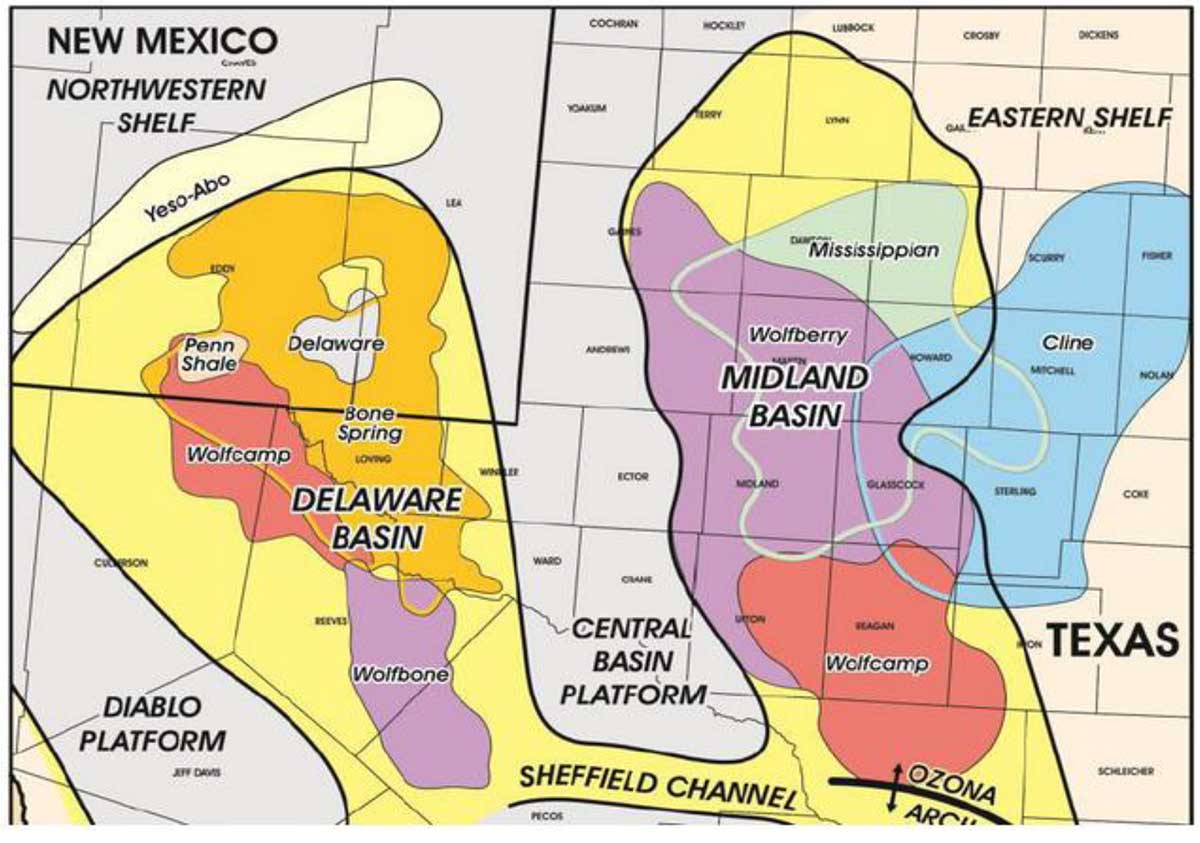
The Permian Basin is important now to the oil industry because it is geographically vast, over ten million acres in size in the two main basins, and because there are multiple oil and gas bearing layers stacked on top of each other, as many as fourteen zones. The total column of productive sediment is as much as 8000 feet thick. By comparison, the prolific Eagle Ford Shale in south Texas rarely exceeds 400 feet in thickness. 

For a visual picture, the following map shows the general boundaries of the Permian Basin. The entire basin is productive, some areas more than others. 
Following is the map of the current land holdings of TPL as seen in their annual report or on their website: 
The main appeal of the Permian Basin is the size and scope of proven reserves combined with the presence of abundant take-away capacity already in place and the relative ease of building more new capacity. The lifting costs for new drilling are among the lowest, if not the lowest, in the world outside the Middle East and the stacked nature of the play gives the region immense staying power. We have listed these reasons and the interested parties in previous letters and publications, but below are some names and the sizes of their respective transactions focused in the Permian in the last year. This selection of transactions demonstrates the momentum taking place in the region. 
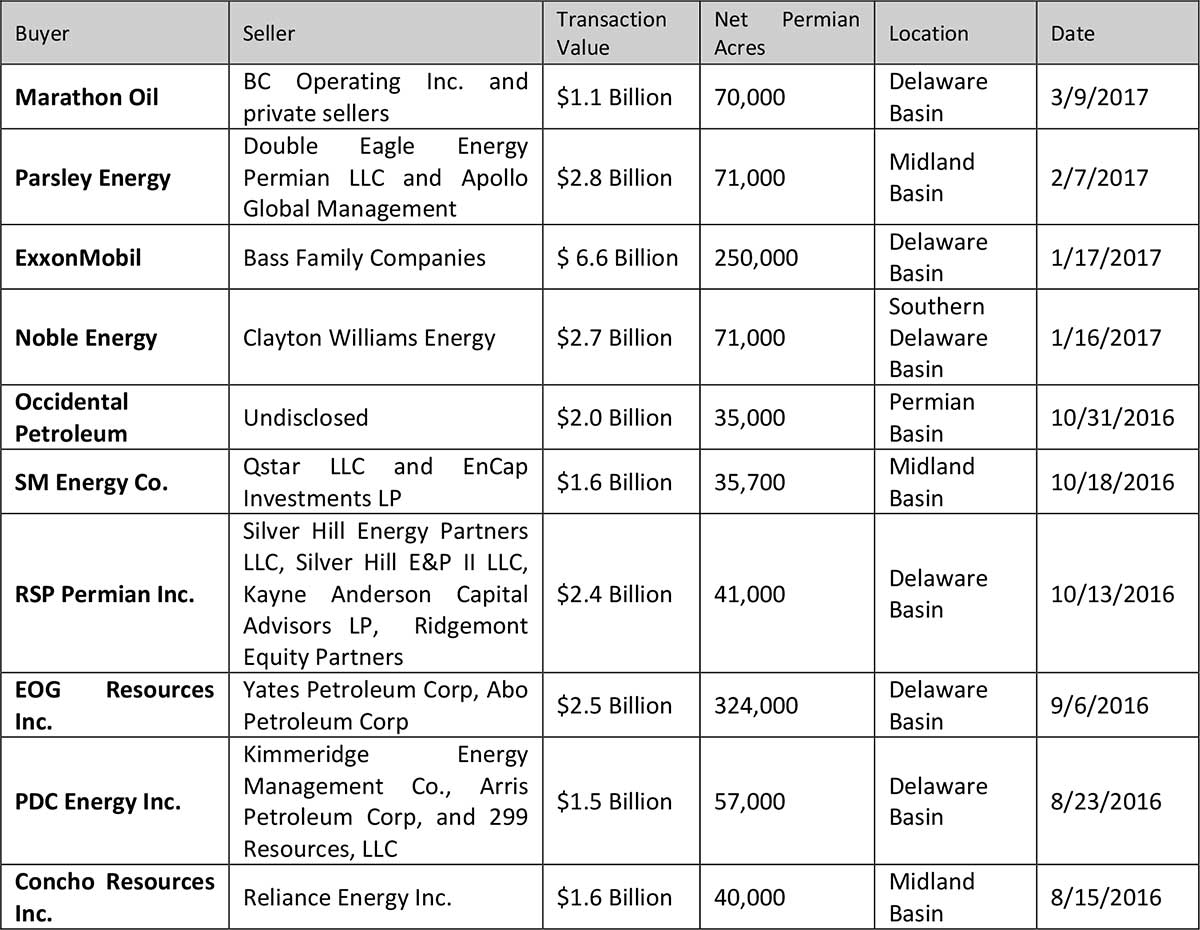
Companies such as Anadarko Petroleum, a $40 billion company, plan to spend as much as 70% of their budget for the next several years in the Permian. There are other large companies that have similar plans. Exxon, for example, plans to expend as much as 40% of their future budget in the Permian after their recent large purchase of additional Permian leases. Tens of billions of dollars will be spent in the area over the next few years as the only way to get a return on that capital is to drill wells and build infrastructure! 


Texas Pacific Land Trust profits without spending money 

The trust only receives money via the fees and royalties from owning land. But because of their large landholding and mineral interests, those fees and receipts have risen tremendously with all the recent drilling activity. Because of the number of wells that are being drilled on TPL mineral land, access fees to build a road, lay a pipeline or clear a drilling site on TPL land are all going up. So are production royalties. These growing revenues come at no cost to TPL shareholders. There may even be a new source of 

revenue on the horizon through the sale of subsurface water for drilling. Water rights are retained by the surface owner and TPL is one of the biggest, if not the biggest in the area. All available non-potable water will be needed to keep pace with fracking in the future. Since TPL owns a lot of water, its shareholders could soon see another source of revenues. 

Here is the official record of oil and gas production credited to the Trust: 


There are strong indications that royalty barrel increases will continue apace this year and likely for years to come. The percentage increases for 2015 and 2016 at TPL have been 52% and 53% respectively. Based on the increased number of wells drilled on TPL land last year and the continued pace of drilling, 2017 could be another good year of volume growth, and prices are higher. The average price of oil received on 2016 oil for TPL was just $38/bbl. The current price is about 32% higher. If that price holds and volumes increase this year at close to the same pace as previous years, TPL revenues could be double that of 2016. 

According to Reuters, another factor suggesting future TPL revenue is that almost half of the wells drilled in the Permian over the last year were not fully completed. One obvious reason for this could be that drilling is presently outpacing take-away capacity. We have personally observed lots of gas being flared and numerous oil and water trucks on the roads in the Delaware Basin. Because many leases contain drilling provisions in order to hold the land, many wells simply are not completed as fast as they are drilled. The rigs and crews have to move on. So much infrastructure is needed that it is hard to keep up. 

Over time however, flared gas will be collected, oil and liquids will be piped out and uncompleted wells will be completed. 

Specifically relating to TPL, it appears that many of the wells reported as drilled in the past two years are not yet completed or else production numbers would be far higher. As they are completed, the wells should prove to be a source of stronger volume and revenue increases. 

The next five years should show tremendous increases in royalty barrels at TPL 

Many of the current operators in the Delaware Basin will soon change the nature of their drilling programs to concerted drilling from pads designed to drill multiple wells as quickly as possible. This is a shift from exploration and evaluation to production. It appears that this process could start in the second half of 2017 and pick up the pace over the next several years. We believe the pace of drilling by most of the big operators in the Permian will accelerate soon if oil prices are flat. We also think that the number of wells drilled on TPL may double as early as this year and uncompleted wells will come online. All of this is at no extra cost to shareholders of TPL. We think all these factors make Texas Pacific Land Trust the most economically efficient company in the Permian Basin. 

Yours Truly, 

Mission Advisors 


Addendum 

TPL released their First Quarter 2017 earnings on 4/27/2017. As we expected, revenues we up significantly from last year. For more details see the link below: 

http://www.businesswire.com/news/home/20170427006458/en/